
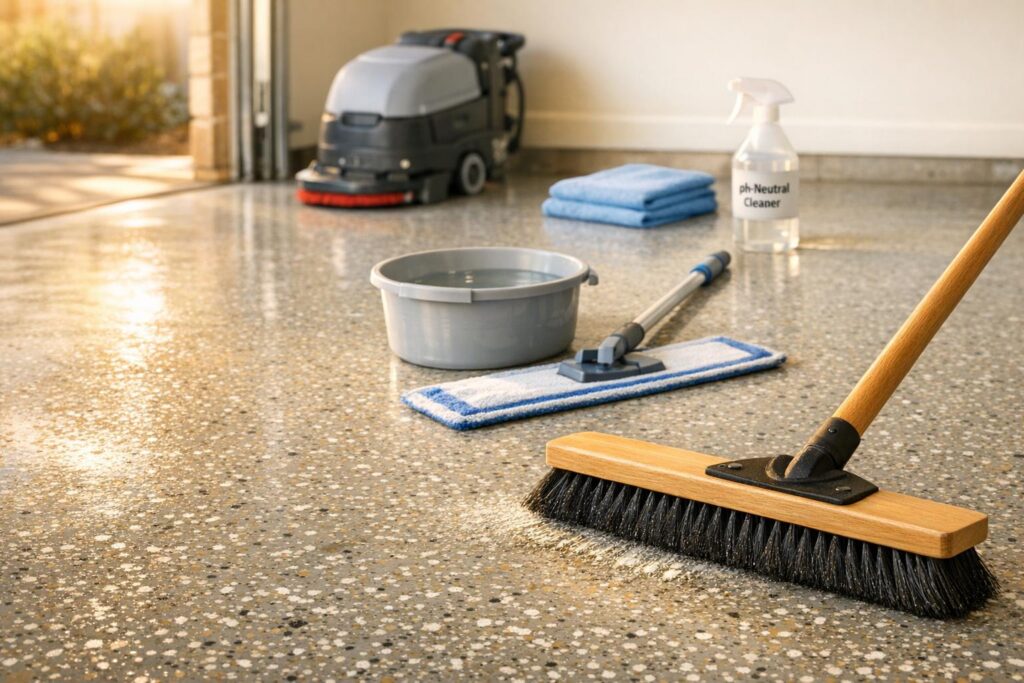
Polyurea garage floors are durable, resistant to chemicals, and designed to handle heavy use. However, proper maintenance is essential to keep them looking and performing their best. Here’s a quick guide:
- Daily Care: Sweep or vacuum to remove dirt and grit that can scratch the surface. Clean spills immediately to avoid stains or damage.
- Weekly Cleaning: Mop with a pH-neutral cleaner and warm water to maintain the floor’s appearance. Rinse thoroughly and dry to prevent water spots.
- Monthly Deep Cleaning: Address tough stains with diluted ammonia or mild detergents. Inspect for chips, scratches, or wear, especially in high-traffic areas.
- Prevent Damage: Use parking mats under tires, furniture pads under heavy items, and avoid harsh chemicals like bleach or vinegar. In winter, use sand or kitty litter instead of rock salt.
Routine inspections and quick action on spills or damage can extend the lifespan of your polyurea floors. For major issues like peeling or cracks, professional help may be necessary.
Polyurea Garage Floors: Lifespan, Maintenance Tips, and Value Boost
sbb-itb-4b4bb37
Cleaning Tools and Supplies You’ll Need
The right tools and supplies make all the difference when caring for your polyurea floor. Using improper equipment can lead to scratches or residue buildup, so it’s crucial to choose wisely.
Basic Cleaning Tools
Start with a soft-bristled push broom for daily sweeping. The bristles should be flexible enough to avoid scratching the surface. For dust, a flat-head microfiber mop with replaceable pads is perfect – it cleans effectively without causing damage. You can also use a vacuum with a hard floor attachment for a quick and scratch-free clean.
For spills, keep absorbent materials like kitty litter or baking soda handy. These are particularly effective for soaking up oil and grease. Simply sprinkle the material, let it sit for 10–15 minutes, and then sweep it up.
Safe Cleaning Solutions
The cleaning solution you use matters just as much as your tools. Stick to pH-neutral cleaners diluted in warm water for routine cleaning. For everyday messes, you can mix one part Simple Green with eight parts warm water, or one part Windex with three parts water.
Avoid harsh chemicals like bleach, ammonia, or acidic cleaners. These can degrade the polyurea coating over time. Standard soaps are also a poor choice since they often leave a hazy film on the surface. Stay away from vinegar or citrus-based cleaners, as their acidity can etch the coating, and bleach can leave behind residues that dull the shine. After cleaning, always rinse with clean water and dry the floor with a mop or towel to prevent water spots.
Floor Protection Accessories
Protecting your floor goes beyond cleaning. Accessories like parking mats under vehicle tires and furniture pads under heavy items such as workbenches or storage units can prevent wear and tear. When moving heavy equipment, place mats or towels underneath to avoid scratches or uneven marks from dragging.
In winter, skip rock salt, which can corrode the surface. Instead, use sand or kitty litter to improve traction without risking chemical damage. These small precautions can extend the life and appearance of your floor.
Daily, Weekly, and Monthly Cleaning Schedule
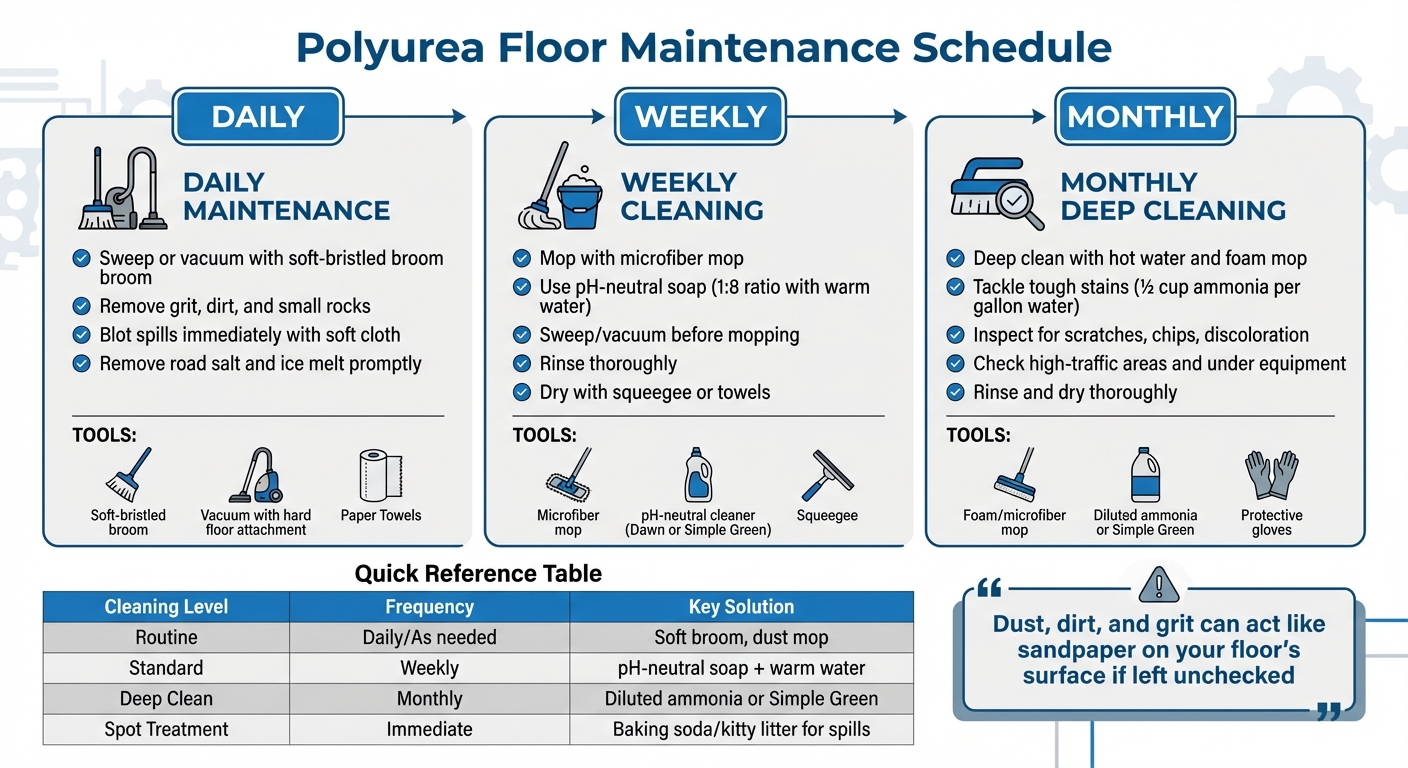
Polyurea Garage Floor Maintenance Schedule: Daily, Weekly, and Monthly Tasks
Keeping your polyurea floor in top condition requires a routine that balances daily care with deeper cleaning. Breaking tasks into daily, weekly, and monthly schedules ensures no area is neglected while keeping maintenance manageable.
Daily Maintenance
Start with a quick sweep or vacuum using a soft-bristled broom or a vacuum with a hard floor attachment. This prevents grit like small rocks or sand – often tracked in by vehicles – from scratching the surface. These tiny particles can act as abrasives, wearing down the coating over time.
"Dust, dirt, and grit can act like sandpaper on your floor’s surface if left unchecked." – Classic Coatings & Outdoor Solutions
For spills, blot them immediately with a soft cloth or paper towel. Avoid chemical cleaners, as automotive fluids or oils can damage the coating and create a slippery hazard. During winter, road salt and ice melt should be removed promptly, as they can corrode the surface.
Daily cleaning habits help prevent buildup, making weekly tasks more effective.
Weekly Cleaning
Once a week, mop the floor using a microfiber mop and a solution of warm water mixed with a pH-neutral soap like Dawn or Simple Green (1:8 ratio). Before mopping, sweep or vacuum to clear away loose debris, reducing the risk of scratches. Rinse thoroughly after mopping and dry the floor with a squeegee or towels to avoid water spots.
For stubborn grime, let the cleaning solution sit for a few minutes before gently scrubbing. Weekly cleaning helps maintain the floor’s appearance and prepares it for more intensive monthly care.
Monthly Deep Cleaning
A deeper clean every month tackles oil, residue, and tougher stains. Use hot water and a foam or microfiber mop to focus on heavily soiled areas. For persistent stains, mix ½ cup of clear ammonia with a gallon of warm water. Wear gloves and ensure proper ventilation when using ammonia. Avoid harsh chemicals like bleach or vinegar, as they can harm the polyurea coating.
Take this time to inspect the floor for any scratches, discoloration, or wear – especially in high-traffic spots, corners, and under heavy equipment or vehicles. After cleaning, rinse the surface with clean water and dry it thoroughly to prevent streaking.
| Cleaning Level | Frequency | Recommended Tools & Solutions |
|---|---|---|
| Routine Maintenance | Daily / As needed | Soft-bristled broom, microfiber dust mop, or shop vac |
| Standard Cleaning | Weekly | Microfiber mop, warm water, pH-neutral soap (e.g., Dawn) |
| Deep Cleaning | Monthly / Quarterly | Diluted Simple Green (1:8) or clear ammonia (½ cup per gallon) |
| Spot Treatment | Immediate | Paper towels for spills; diluted Windex (3:1) for minor stains |
How to Handle Spills, Stains, and Prevent Damage
Cleaning Spills and Stains
When dealing with spills like oil, antifreeze, or brake fluid, quick action is essential. Start by blotting the spill with a soft cloth or paper towel to prevent slipping and protect the floor’s surface. For heavier spills, such as grease or oil, sprinkle baking soda or kitty litter over the area. Let it sit for 10–15 minutes to absorb the liquid before sweeping it up.
Afterward, clean the area with a microfiber cloth dampened in warm water mixed with a pH-neutral cleaner. For stubborn tire marks, use a soft-bristled brush with mild detergent to gently scrub the affected spot. Avoid tools like steel wool, scrapers, or stiff brushes, as these can scratch the floor’s finish. Once cleaned, rinse thoroughly with clean water to remove any residue that could leave a dull film. Acting quickly and using the right techniques ensures your floor stays in great shape.
Preventing Floor Damage
Once spills are addressed, focus on protecting the floor from future wear and tear. Place walk-off mats at entry points and parking mats under vehicles to catch debris, road salt, and fluid drips, reducing the risk of scratches. When moving heavy equipment, use furniture pads or towels to avoid scuffing the surface.
During winter, opt for sand or kitty litter for traction instead of harsh rock salt, which can corrode the coating. Additionally, if your garage doubles as a space for pets, keeping their nails trimmed can prevent scratching. These simple habits go a long way in preserving the durability and appearance of your polyurea-coated floor for years to come.
Inspecting and Repairing Your Polyurea Floor
Monthly Floor Inspections
Make it a habit to inspect your garage floor every month for signs of wear and tear. Start by sweeping or vacuuming the area to remove dust and debris, making it easier to spot cracks, scratches, or chips. Once the surface is clear, check for discoloration, peeling, or other visible damage.
Pay extra attention to high-traffic areas like entryways and the spots where your vehicle tires rest or heavy equipment is stored. These sections endure more pressure and are more likely to show wear. Chips often appear as lifted sections where the concrete underneath becomes visible.
Run your hand over the floor to feel for uneven or rough spots – these could signal that abrasive debris is eroding the finish. If the floor looks hazy or dull, test-clean a small area with a pH-neutral cleaner. If the shine returns, it’s likely just a buildup of soap, salt, or dirt rather than actual damage. Catching these issues early can help you decide whether a quick DIY fix will do or if it’s time to contact Atlas Concrete Coatings for professional help.
When to Call for Professional Repairs
While minor scuffs can often be handled with touch-up kits, more serious problems like peeling, deep scratches, or spreading chips require professional attention. If you notice peeling or flaking that exposes the concrete underneath, it could mean the bond between the polyurea coating and the concrete has weakened. In such cases, professional reapplication may be necessary. Reach out to Atlas Concrete Coatings for expert repairs.
It’s also crucial to address cracks and chips that are spreading. Left unchecked, these can create safety hazards or allow moisture to seep beneath the coating, compromising the floor’s durability. Atlas Concrete Coatings specializes in assessing and repairing these issues, ensuring your floor is restored to its original durability and waterproof state. Their skilled team uses high-quality materials designed to extend the life of your polyurea floor.
Conclusion
Taking care of your polyurea garage floor doesn’t have to be complicated or costly. Simple steps like sweeping away dirt, promptly cleaning up spills, and using pH-neutral cleaners can help keep your floor looking great. As George Apap wisely says, "A clean concrete floor doesn’t just look better – it lasts longer". With the right care, a polyurea coating can last 15 to 20 years, protecting your garage floor and maintaining a safe environment.
Routine maintenance does more than preserve appearance – it helps prevent serious damage. Regular inspections are key to catching small issues before they escalate. For instance, addressing minor damage early can stop moisture from seeping under the coating and weakening its bond to the concrete.
When routine care isn’t enough, professional services can step in. Companies like Atlas Concrete Coatings offer expert installation and repair services tailored to polyurea floors. Their materials are built to handle heavy equipment, automotive fluids, and everyday wear and tear. Plus, their lifetime warranty on chip systems gives you peace of mind that your floor is protected for years to come. Whether it’s a minor touch-up or a thorough inspection, their team can restore your floor’s durability and shine.
Maintaining your polyurea floor isn’t just about keeping it clean – it’s about preserving the features that make it a smart investment: chemical resistance, slip resistance, and long-lasting durability. By staying proactive with care and addressing issues early, you’ll save time and money while ensuring your garage floor performs at its best.
FAQs
Can I pressure-wash a polyurea garage floor?
Maintaining a polyurea garage floor properly means avoiding harsh cleaning methods like pressure washing, which can harm the coating. Instead, stick to regular sweeping and gentle cleaning techniques to keep the floor looking great and lasting longer.
What should I do if my floor looks hazy after cleaning?
A cloudy or hazy look after cleaning usually means there’s some cleaning product residue left behind or the floor wasn’t rinsed properly. Using harsh chemicals or abrasive tools can make the problem worse, so it’s best to steer clear of those. To tackle the haze, rinse the floor thoroughly with clean water and go over it with a microfiber mop to bring back its clarity. If the cloudy appearance doesn’t go away, you might need to consider a professional cleaning to restore the floor’s shine.
When is damage serious enough to call Atlas Concrete Coatings?
If your polyurea garage floor is showing signs of scratches, chips, deep stains, or heavy wear that impact its look or strength, it might be time to reach out to Atlas Concrete Coatings. These kinds of problems often go beyond what simple upkeep or small fixes can handle, making professional help essential to bring your floor back to its best condition.