

Looking for the best pool deck coating for high-traffic areas? Here’s what you need to know:
Pool decks face heavy wear from foot traffic, UV rays, water, and temperature changes. Choosing the right coating protects against damage, improves safety, and enhances the look of your space. This guide breaks down four popular options – acrylic, epoxy, polyurea/polyaspartic, and rubberized coatings – based on durability, safety, cost, and design.
Key Takeaways:
- Acrylic Coatings: Affordable ($2–$5/sq. ft.), lasts 5–10 years, cool underfoot, slip-resistant, but prone to cracking and yellowing.
- Epoxy Coatings: Durable ($4–$9/sq. ft.), lasts 10–15 years, customizable, but can yellow under UV and may be slippery when wet.
- Polyurea/Polyaspartic Coatings: Long-lasting ($6–$9/sq. ft.), lasts 15–20+ years, UV-stable, fast curing, but higher upfront cost.
- Rubberized Coatings: Safe and cushioned ($8–$14/sq. ft.), lasts 12–15 years, cooler surface, but limited design options.
Quick Comparison:
| Coating Type | Cost (per sq. ft.) | Lifespan | Key Strength | Key Weakness |
|---|---|---|---|---|
| Acrylic | $2–$5 | 5–10 years | Budget-friendly, cool | Needs frequent upkeep |
| Epoxy | $4–$9 | 10–15 years | Durable, customizable | UV yellowing, slippery |
| Polyurea/Polyaspartic | $6–$9 | 15–20+ years | Long-lasting, fast cure | Higher cost |
| Rubberized | $8–$14 | 12–15 years | Safe, cooler surface | Limited design options |
Pro Tip: For heavy-use areas, polyurea/polyaspartic coatings offer the best performance and longevity. Always hire a professional for proper installation to avoid peeling or failure.
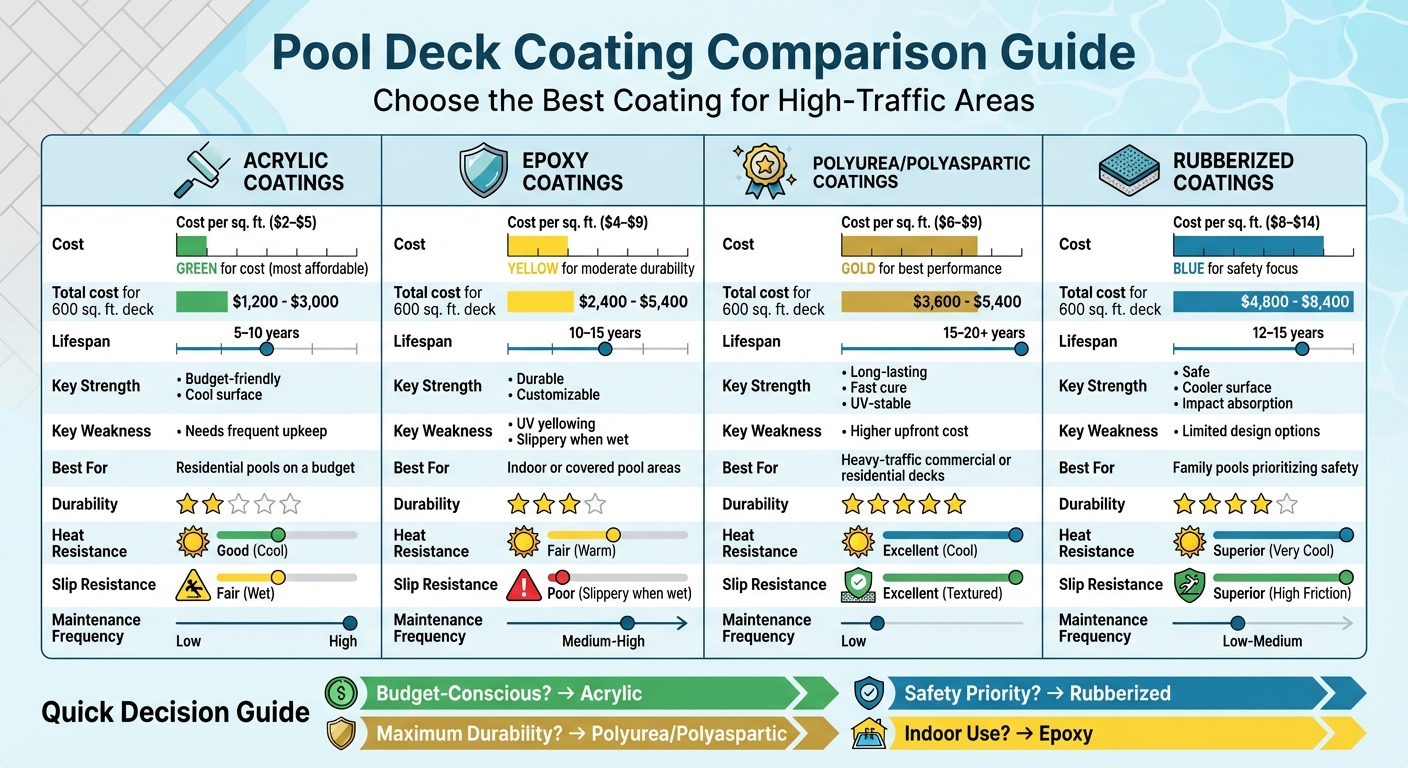
Pool Deck Coating Comparison: Cost, Lifespan, and Performance
Best Pool Deck Coatings: Types, Benefits, And More
sbb-itb-4b4bb37
1. Acrylic Pool Deck Coatings
If you’re looking for an affordable way to upgrade your pool deck, acrylic coatings might be the perfect choice. They cost about $2–$5 per square foot, which means a standard 600-square-foot pool deck would run you $1,200–$3,000 for materials and installation. Compared to epoxy ($4–$9 per square foot) or polyaspartic systems ($6–$9 per square foot), acrylic coatings are a budget-friendly option, especially for residential pools.
But it’s not just about saving money – acrylic coatings are built to last. On average, they hold up for 5–10 years, and with the right care, textured systems can stretch that lifespan to 15 years. That said, they aren’t indestructible. Heavy impacts, prolonged exposure to pool chemicals, or harsh sunlight can lead to cracking or yellowing over time.
Another big advantage? Acrylic coatings help keep things cool. Thanks to their acrylic-latex mixtures, the surface stays noticeably cooler than bare concrete or epoxy – perfect for hot climates where walking barefoot is common. Plus, they offer strong UV resistance, which helps prevent fading and discoloration.
Safety is another highlight. When textured properly, acrylic coatings provide excellent slip resistance, making wet surfaces safer without sacrificing comfort underfoot.
And let’s not forget the aesthetics. Acrylic coatings come in a wide range of colors and patterns, letting you mimic the look of natural stone, tile, or even brick. They dry quickly too – curing in just 8–24 hours, so you can resume light foot traffic shortly after application. This quick curing time also makes reapplications and maintenance a breeze.
2. Epoxy Pool Deck Coatings
Epoxy coatings are a step up in durability compared to acrylic options. Known for their resilience, these coatings are a popular choice for high-traffic pool decks. Pricing typically ranges from $4 to $9 per square foot, so resurfacing a standard 600-square-foot deck would cost between $2,400 and $5,400 – a worthwhile investment for areas that see heavy use.
What makes epoxy stand out is its impressive toughness. It resists scuffs, scratches, and chips, making it ideal for daily wear and tear. With proper maintenance, an epoxy-coated deck can last 10 to 15 years. For spaces with the highest traffic, professionals often recommend 100% solids epoxy, which provides maximum protection against abrasion and impact.
That said, epoxy does have its drawbacks. One major issue is its lack of natural slip resistance, which can become a safety concern. Phillip Renner from GatorGuard explains:
A primary concern is the slippery surface that can result from water, sunscreen, and pool chemicals creating a slick film on the concrete. This turns your pool deck into a potential hazard.
To combat this, installers often add slip-resistant materials like aggregates, sand, or decorative chips to the base coat during application. When done correctly, these textured finishes can achieve a coefficient of friction between 0.49 and 0.59, exceeding OSHA’s standard of 0.42 for non-slip surfaces.
Another challenge is UV exposure, which can cause epoxy to yellow over time. To preserve its glossy appearance, a UV-resistant topcoat – commonly polyaspartic – is highly recommended.
Epoxy coatings also offer plenty of customization options. From metallic additives and decorative pebbles to a wide range of colors, the design possibilities are nearly endless. Plus, it’s practical – most epoxy surfaces are ready for foot traffic within 24 hours of installation.
For the best results, professional installation is key. Proper surface preparation and precise mixing ensure the coating bonds effectively, preventing peeling and extending its lifespan.
3. Polyurea/Polyaspartic Pool Deck Coatings
If you’re impressed by epoxy’s durability, polyurea and polyaspartic coatings take things up a notch. These coatings come with a price tag of $6 to $9 per square foot, meaning a 600-square-foot pool deck would cost between $3,600 and $5,400. While the cost is higher, the performance justifies the investment – polyaspartic coatings are said to be up to 10 times more durable than standard epoxy for outdoor use.
What makes these coatings stand out is their ability to handle the challenges of a pool deck environment. They are tougher and more resistant to abrasion than epoxy, making them ideal for withstanding heavy foot traffic, patio furniture, and even pool toys being dropped. But the real game-changer is their flexibility. Unlike rigid coatings that can crack during freeze–thaw cycles, polyurea and polyaspartic coatings flex with the concrete, preventing damage. Plus, they’re 100% UV-stable, so they won’t yellow, fade, or chalk under direct sunlight – a common issue with epoxy outdoors. This combination of durability and adaptability not only extends the life of your pool deck but also ensures safer and more efficient installation.
Speaking of safety, these coatings deliver a reliable grip. Their coefficient of friction ranges from 0.49 to 0.59, exceeding OSHA’s minimum safety standards.
Another perk is the quick curing time. While epoxy takes 3 to 5 days to fully cure, polyaspartic coatings are ready for use in just 24 hours. With proper care – using pH-neutral cleaners and steering clear of abrasive products – these coatings can last over 20 years. They also come in a variety of colors and decorative flake options, allowing for customization. For those in warmer climates, choosing lighter colors can help reflect heat, keeping the surface cooler for bare feet.
4. Rubberized/Elastomeric Pool Deck Coatings
Rubberized coatings bring a mix of durability, safety, and comfort to pool decks, making them a solid choice for high-traffic areas. These surfaces are created by combining recycled tire crumbs with binders and finishing them with EPDM granules. The result is a cushioned surface that absorbs impact, offering a softer landing that can help reduce injuries from falls. Plus, their flexibility allows them to cover small cracks and adapt to temperature changes, such as freeze-thaw cycles, which can often damage more rigid coatings.
Safety is another standout feature. The naturally textured surface provides excellent slip resistance, even when wet. Since these coatings are 100% porous, they drain water quickly – up to 75 gallons per minute per square yard – helping to prevent puddles from forming. On top of that, rubberized surfaces stay cooler than standard concrete, typically 30–40°F lower, keeping them comfortable for bare feet. Landon Olson from Replay Surfacing Inc. highlights this as a key benefit.
When it comes to costs, installation typically runs between $8 and $14 per square foot, translating to about $4,800–$8,400 for a 600-square-foot deck. While this pricing is similar to polyurea coatings, rubberized decks generally last 12 to 15 years. Maintenance involves applying a rebinder treatment every 2 to 3 years, which costs around $1 to $2 per square foot . Beyond their durability, these coatings also offer design versatility.
EPDM granules can be customized with logos, patterns, and borders to suit any pool shape. Lighter-colored granules not only reflect heat but also reduce visible UV fading. Plus, using recycled tires in their construction adds an eco-friendly angle .
That said, these coatings aren’t without drawbacks. Their porous nature, while great for drainage, can trap stains if spills aren’t cleaned up quickly. Additionally, the textured surface may feel slightly rougher on bare feet compared to the smoother finish of polyaspartic coatings, though this depends on the chosen texture grade. For those prioritizing safety, comfort, and long-lasting performance, rubberized coatings are a strong contender for pool decks.
Advantages and Disadvantages
When it comes to selecting the right coating for your pool deck, it’s all about balancing the pros and cons. Each type of coating has its own set of strengths and weaknesses, which can directly influence your budget, maintenance needs, and how well your deck holds up under heavy use. Let’s break it down.
Acrylic coatings are the go-to choice for those on a tight budget. They’re affordable and offer plenty of design flexibility, making it easy to customize your pool deck’s look. But the trade-off? They don’t last as long – typically around 5–10 years – and require frequent upkeep. Plus, they’re not the best at handling heavy foot traffic due to lower abrasion resistance.
Epoxy coatings offer a tough, chemical-resistant surface with a lifespan of about 10–15 years. They’re durable, but they come with some drawbacks. Exposure to UV light can cause yellowing, and they can become dangerously slick when wet. Additionally, their rigid nature means they’re prone to cracking if the concrete beneath them shifts. While they’re functional, epoxy coatings may not be the best choice for every situation.
Polyurea and polyaspartic coatings are the top-tier option for those seeking long-lasting performance. With a lifespan of 15–20 years (or more) and about four times the abrasion resistance of epoxy, they’re built to handle high-traffic areas. They cure in just one day, perform well in temperatures ranging from -30°F to 140°F, and maintain solid slip resistance – even when wet. The downside? They come with a higher upfront cost, but many see this as an investment that pays off over time.
Rubberized coatings shine when safety is a priority. They offer excellent impact absorption, a cooler surface underfoot, and enhanced safety features. However, they lack the design flexibility of other options, which might limit your creative choices.
Here’s a quick comparison to help you weigh your options:
| Coating Type | Cost (per sq. ft.) | Lifespan | Key Strength | Key Weakness |
|---|---|---|---|---|
| Acrylic | $2–$5 | 5–10 years | Affordable; customizable designs | Frequent maintenance needed |
| Epoxy | $4–$9 | 10–15 years | Durable; chemical resistant | Yellows under UV; slippery wet |
| Polyurea/Polyaspartic | $6–$9 | 15–20+ years | Extremely durable; fast curing | Higher initial cost |
| Rubberized | $8–$14 | 12–15 years | Safer; cooler surface; absorbs impact | Limited design options |
Conclusion
Picking the best pool deck coating means aligning your specific needs with the right material and performance level. If you’re working with a tight budget and don’t mind periodic upkeep, acrylic coatings will get the job done. Just be prepared to reapply them every 5–8 years. For areas with moderate foot traffic, epoxy coatings perform well indoors but tend to degrade outdoors due to UV exposure, leading to discoloration and yellowing over time.
For pool decks that see heavy use and require long-lasting durability with minimal upkeep, polyurea and polyaspartic coatings stand out. These options are incredibly durable and flexible, which helps prevent cracking under stress. While the initial cost is around $6–$9 per square foot, these coatings can last over 20 years with little maintenance – making them a cost-effective choice in the long run.
However, material quality alone isn’t enough. The success of your pool deck coating also depends on proper installation. Poor surface preparation, such as inadequate concrete profiling or a lack of moisture barriers, can lead to peeling and failure within just a few years. Professional contractors play a key role here, using specialized tools to prepare the surface, apply moisture vapor barriers, and ensure the coating adheres permanently.
Companies like Atlas Concrete Coatings excel in delivering high-quality installations. They focus on polyurea-based systems designed for high-traffic pool decks, offering features like UV stability, enhanced slip resistance, and customizable flake blends. Their meticulous approach includes multi-layer moisture management and precise surface preparation to ensure long-term performance.
If you want a pool deck that can handle heavy use without frequent repairs, investing in professional-grade polyurea or polyaspartic coatings – paired with expert installation – is the way to go. This combination highlights the importance of not just choosing the right material but also ensuring it’s applied correctly from the beginning.
FAQs
Which pool deck coating stays coolest in full sun?
Textured acrylic or latex coatings work well for keeping surfaces cooler under direct sunlight. These coatings are designed to reflect heat and sunlight better than many alternatives, making them especially suitable for busy poolside areas.
Do I need a slip-resistant additive for my pool deck?
Adding a slip-resistant additive to your pool deck is a smart move. It boosts safety by improving traction on wet surfaces, which helps lower the chances of slips and falls. This is particularly crucial in busy areas or for households with kids and older adults.
Can a coating be installed over cracked or damp concrete?
Coatings can work effectively on cracked concrete, but only if the cracks are repaired properly first. It’s crucial to address any damage before applying the coating to ensure a smooth and durable finish. However, avoid applying coatings on damp concrete. Moisture can compromise adhesion and significantly impact the coating’s longevity.